

Why Engagement Defines Success
Projects fail every day—not because of poor planning or weak technology, but because the people who matter most weren’t truly engaged.
You can deliver on time and on budget, yet still fall short of real success if employees don’t adopt the change, leaders don’t champion it, and stakeholders don’t feel invested in the outcome.
At Epic Solution Partners, we’ve seen it firsthand: engagement is the single biggest differentiator between projects that transform organizations and those that fade into irrelevance.
The Engagement Gap in Projects
Executives often assume engagement will “just happen” once the project is underway. The thinking goes: we’ve got a project manager, a steering committee, and a communication plan—what more do we need?
The reality? Engagement is usually the first thing to slip under pressure. Leadership presence fades. Communication becomes transactional. Stakeholders stop feeling part of the journey.
Industry research backs this up: the majority of failed projects cite lack of stakeholder buy-in as the root cause—not technical flaws.
What True Stakeholder Engagement Looks Like
Stakeholder engagement isn’t a status report. It’s not checking a box. It’s about making people feel they belong to the change.
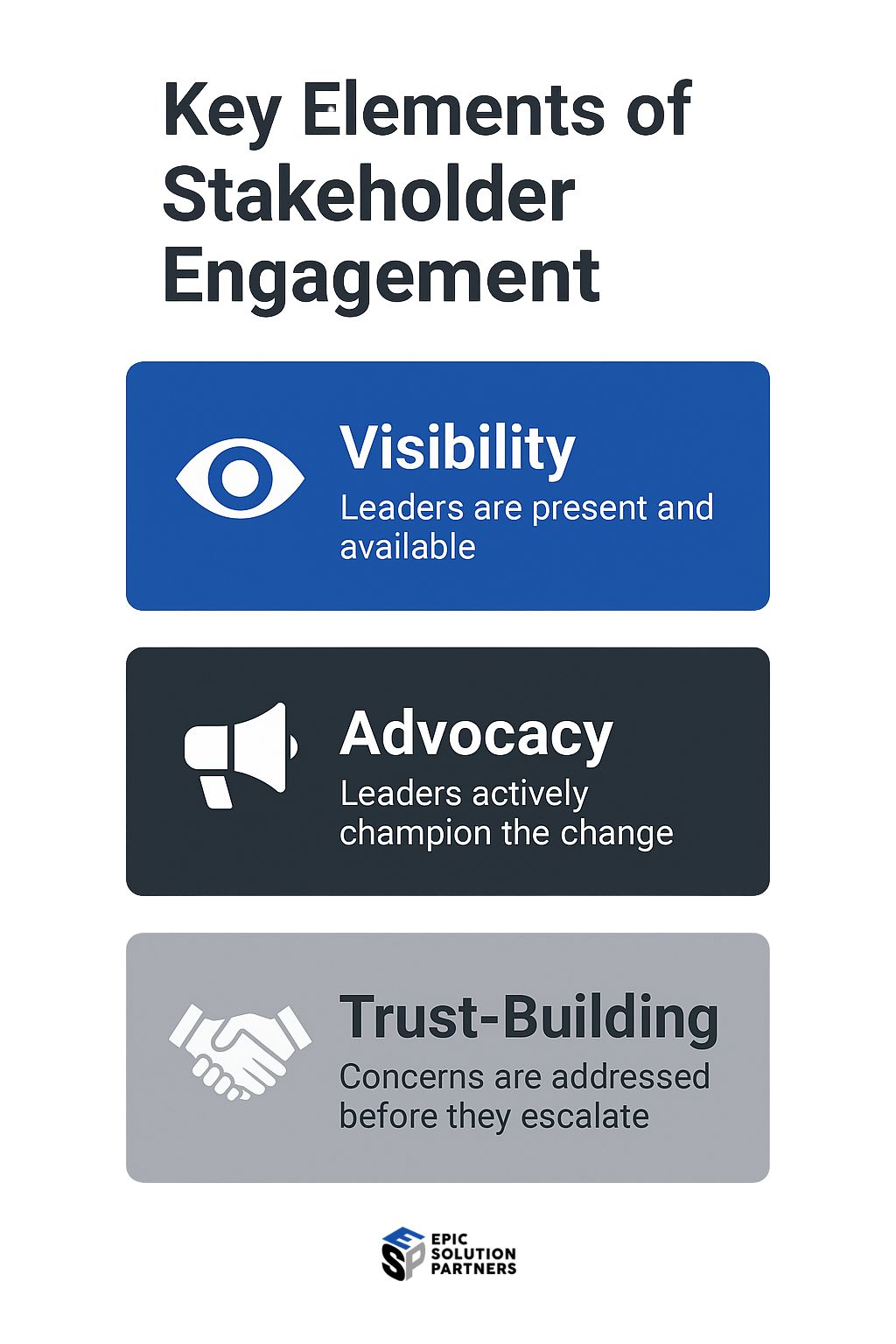
That means:
- Visibility: Leaders show up, visibly supporting the project at key milestones.
- Advocacy: Executives don’t just approve—they actively tell the story of why this matters.
- Trust-building: Concerns are surfaced early and taken seriously, before resistance hardens.
In other words, engagement is equal parts psychology and leadership. This is where most organizations underestimate the effort required.
The Role of Executives in Driving Engagement
Project managers can coordinate. Change leads can advise. But only executives can set the tone for true engagement.
When leaders model adoption, connect the project to organizational strategy, and empower champions within their teams, they create conditions where change can stick.
This is why ESP deploys Fractional Project Executives—leaders who operate at the executive level, bridging strategy and operations. They don’t just keep the project moving; they ensure engagement flows from the top down and across every stakeholder group.
The Cost of Ignoring Engagement
When engagement is absent, the warning signs look familiar:
- A system is delivered, but no one uses it.
- Employees feel blindsided, leading to quiet resistance.
- ROI projections collapse as adoption falters.
And the cost isn’t just financial. Leaders lose credibility. Teams grow skeptical of future initiatives. Organizational momentum stalls.
The price of ignoring engagement is far greater than the investment required to build it.
Our Approach to Stakeholder Engagement
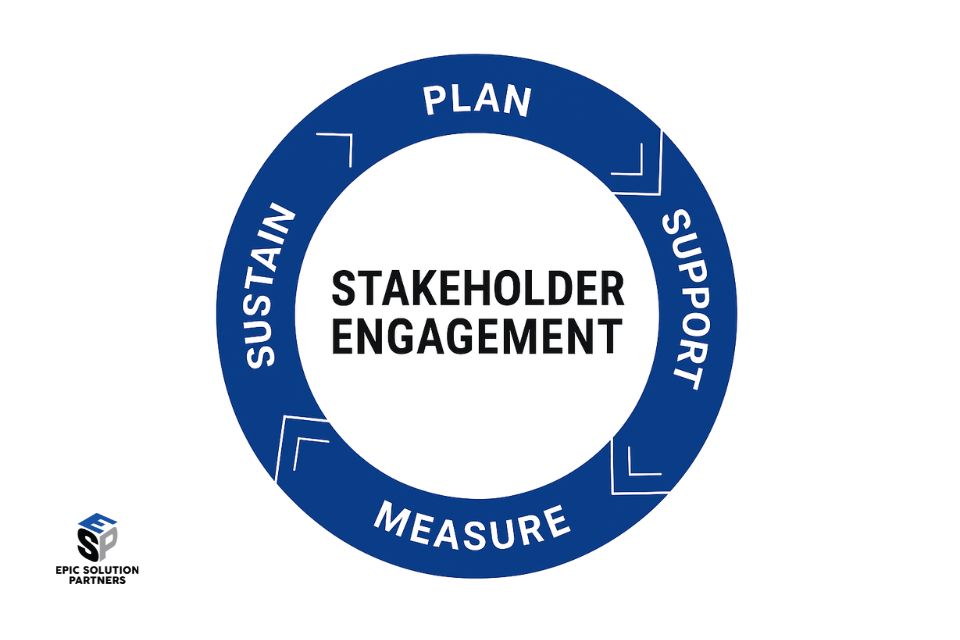
At Epic Solution Partners, we’ve built our reputation on one belief: a project isn’t successful until it’s adopted.
We embed executive-level leadership through our Fractional Project Executive model—ensuring engagement and adoption aren’t left to chance. And because we operate on a consumption-based pricing model, organizations only pay for the leadership they need, when they need it.
We collaborate deeply with internal teams but remain accountable for outcomes. That’s how we help organizations move beyond delivery to lasting transformation.
Final Thoughts: Engagement is Leadership
Projects don’t fail because people don’t care. They fail because leaders underestimate how much visibility, advocacy, and emotional commitment are required for change to stick.
If you want your next project to succeed, don’t just fund it—lead it. Engage your stakeholders, own the narrative, and make adoption the ultimate measure of success.
At Epic Solution Partners, that’s the work we do every day. And we’d be honored to help you make engagement the cornerstone of your next project.

Frequently Asked Questions About Stakeholder Engagement
Q1. Why is stakeholder engagement important in project management?
Stakeholder engagement ensures that the people affected by a project are aligned, informed, and invested in its success. Without engagement, projects risk resistance, low adoption, and wasted investment—even if delivered on time and on budget.
Q2. What role should executives play in stakeholder engagement?
Executives must go beyond sponsorship and actively champion the change. Their visibility, advocacy, and storytelling set the tone for the entire organization. At ESP, we embed Fractional Project Executives to ensure this leadership role is consistently fulfilled.
Q3. What happens when stakeholders aren’t engaged?
When engagement is missing, adoption lags, employees revert to old habits, and ROI diminishes. In many cases, the system or process delivered is technically sound but fails to create lasting impact because people don’t embrace it.
Q4. How do you measure stakeholder engagement in a project?
Engagement can be measured through participation in workshops, feedback loops, champion activity, and post-go-live adoption metrics. True engagement shows up in changed behaviors, not just in meeting attendance.
Q5. How does ESP approach stakeholder engagement differently?
We believe engagement isn’t an add-on—it’s central to project success. Our Fractional Project Executives bring executive-level leadership to ensure adoption, while our consumption-based pricing model gives organizations the flexibility to engage us at the right time, for the right value.