
When Project Success Isn’t Enough
We’ve all seen it: a major transformation project goes live, the technology is in place, the Gantt chart is green—and yet, six months later, nothing has really changed. The processes still run the old way, staff are frustrated, and ROI is elusive.
This is the difference between delivery and adoption.
At Epic Solution Partners, we’ve learned that the real success of any change initiative hinges not on timelines or deliverables—but on whether the change takes hold. And that’s something only executive leadership can truly drive.
The Executive’s Role in Change Management
Too often, change management is delegated downward—seen as the responsibility of project managers, change leads, or department heads. But the truth is, when executives stay on the sidelines, change rarely sticks.
Real adoption requires authority, trust, and vision—things that only leadership can bring. It’s why we embed Fractional Project Executives into our engagements: not to run the day-to-day, but to lead change from the top while remaining grounded in operations.
Executives don’t need to do everything—but they must own the outcome. When they do, resistance softens, clarity increases, and momentum becomes self-sustaining.
What Makes Change “Stick”: Beyond Gantt Charts
A completed project plan doesn’t guarantee people will use what’s been built. Adoption is a human issue, not a technical one.
The strategies that ensure adoption tend to look less like governance meetings and more like stakeholder mapping, emotional signaling, and culture shaping. This is where emotional intelligence becomes operational.
When we lead change at ESP, we ask:
- Who is silently resisting, and why?
- What are the unspoken narratives inside this organization?
- How will this change affect people’s identity, status, or workload?
Project management is science. Adoption is psychology. You need both.
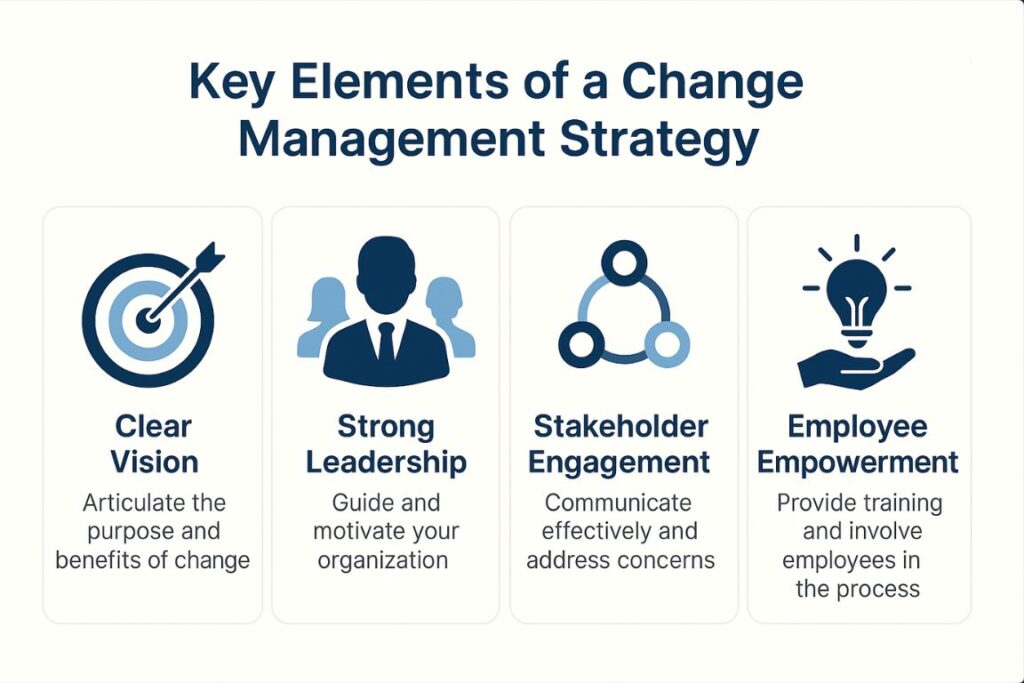
The Critical Elements of a Successful Strategy
A world-class change management strategy requires more than training and comms plans. These are the elements we prioritize when partnering with executives:
Vision Alignment
Change must be in service of something bigger. Employees adopt change when it’s clearly connected to the organization’s goals—and when they understand why it matters now.
Communication Cadence
Communication must be regular, multi-layered, and emotionally intelligent. Updates alone aren’t enough—leaders must be able to frame change in a way that resonates.
Stakeholder Mapping
You need more than a stakeholder list—you need to understand influence, not just titles. Who shapes sentiment behind the scenes? Who’s at risk of being left behind?
Change Agents
Identify internal champions who can advocate for the change in their teams. Then give them the tools, support, and political cover to succeed.
Post-Go-Live Support
Adoption doesn’t happen on launch day. Too many strategies end at implementation. A proper strategy includes measurement, feedback loops, and time for behaviors to normalize.
What Executives Often Miss (And Why It Costs Them)
Here’s what we see derail well-intentioned change efforts:
- Confusing delivery with adoption: Just because the system is live doesn’t mean it’s being used—or used well.
- Delegating leadership too far down: PMs can’t drive cultural change. Leaders must model the shift.
- Underestimating resistance: People don’t resist change—they resist being changed. That distinction matters.
The cost of missing this? Redundant projects, employee fatigue, stalled ROI, and credibility loss.
ESP’s Approach: From Strategy to Adoption
At Epic Solution Partners, we don’t just manage projects—we lead organizational change. Our model brings in executive-level leadership through our Fractional Project Executive service, which means there’s someone in the room who understands both the boardroom and the delivery team.
Our consumption-based pricing model means you get leadership when you need it, without overcommitting budget on a monthly retainer. It’s value-based. It’s flexible. And it works.
We hold ourselves—and our partners—accountable to outcomes, not just activity. That’s how change becomes real.
Final Thoughts: Drive Change That Lasts
Change initiatives don’t fail because people don’t care. They fail because leadership underestimates how much clarity, repetition, and personal modeling are required to make new behaviors stick.
If you’re an executive looking to ensure your next transformation effort actually changes something—consider this your moment to lead from the front.
Let’s talk about what it looks like to drive change that lasts.